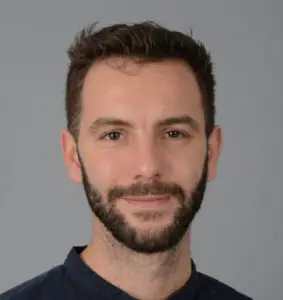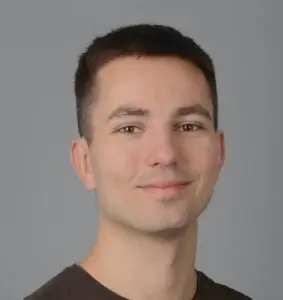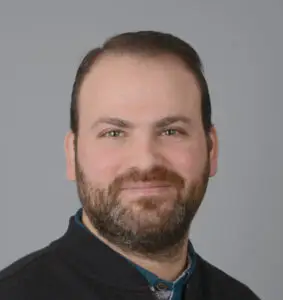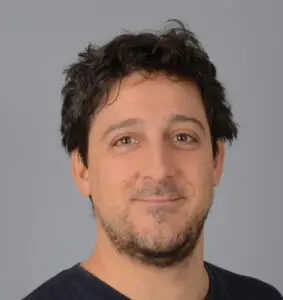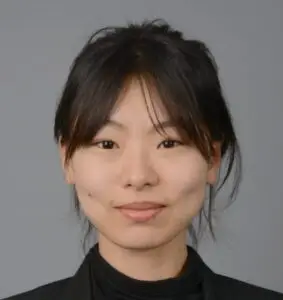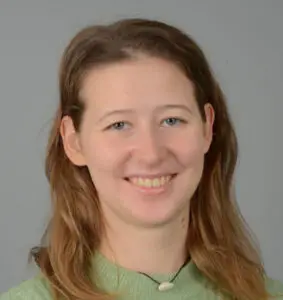
Fanny Jaulin Chercheur Responsable

Fanny Jaulin, Ph.D

Group Leader

J'ai toujours été fascinée par la forme des cellules, l'architecture multicellulaire et son lien avec la fonction tissulaire. J'ai fait mes études de doctorat dans le laboratoire de Jean-Paul Borg travaillant sur des complexes protéiques établissant une polarité apico-basolatérale dans les tissus épithéliaux normaux. En tant que stagiaire postdoctoral à New York, j'ai suivi une formation dans les laboratoires de Geri Kreitzer (Weill Medical College) et Alan Hall (MSKCC) développant des approches basées sur la biologie cellulaire 3D et la microscopie pour décrypter le rôle du cytosquelette dans la morphogenèse des cellules épithéliales.

It is through the INSERM/CNRS ATIP-AVENIR award for young investigators that I have established my lab at the Gustave Roussy Institute. I now coordinate a team of talented scientists and clinicians to unlock some of the mysteries behind the metastatic progression of digestive cancers.

Sabrina Bedja
engineer

I earned a bachelor’s in Cellular Biology and Physiology (Reims, 2017) and a master’s in Biology and Experimental Therapies (Paris 13, 2019), where I trained in Dr. Séverine Létuvé’s team on lung disease. After research in Montpellier on kinase dysregulation and CDK4 inhibitors in cancer, I joined Jaulin’s lab in 2020 to study organoids and develop personalized treatments.

Alice Boileve,
MD, PhD
hEad of clinic, ONCOLOGY UNIT

I earned my medical degree in 2021 and completed my PhD in the Dr. Fanny Jaulin’s lab, where I studied the mechanisms of pancreatic cancer invasion. As a medical oncologist specializing in digestive cancers and a graduate of the École Normale Supérieure in biology, I now work with European experts in environmental toxicology, genomics, transcriptomics, metabolomics, and the microbiome to investigate the complex factors driving digestive cancers in young adults.

Damelys Calderon
principal investigator

I am a Principal Scientist and immunologist specializing in organoid models, stem cell biology, and drug screening. At the Jaulin Lab (Gustave Roussy Hospital), I study immunotherapy toxicity and develop 3D models to investigate epithelial barrier function and immune–epithelial interactions. Previously at the Imagine Institute, I modeled rare kidney diseases using organoids to uncover mechanisms and therapeutic targets, following earlier work on stem cell–derived cardiac tissues and immune responses at Mount Sinai (New York) and Hôpital Necker (Paris). My research, published in several journals, reflects my passion for using organoid technology to advance drug discovery and precision medicine.

Elise Carraz-Billat
phd student

I graduated as an engineer from AgroParisTech in 2023 and completed a research master’s degree in cell biology at Sorbonne University, before joining the Jaulin lab to start a PhD project at the interface of cancer research and cell biology. My work focuses on the mechanisms and different actors used by cell clusters during collective amoeboid migration, a recently identified mode of migration observed in patient samples. I aim to understand how actin cytoskeleton remodeling supports supracellular organization and anchors collective movement in this novel migration mode.

Jérôme Cartry, Ph.D

Engineer

J'ai obtenu un doctorat en biologie du développement à l'Université Paris VI (Jussieu) en 2008. J'ai ensuite étudier la fonction cardiaque génétique au Sanford Burnham Prebys Medical Discovery Institute à San Diego (USA). J’ai rejoint l’institut Gustave Roussy depuis 2015, tout d’abord comme associé de recherche clinique et maintenant comme ingénieur dans le laboratoire de Jaulin. Je développe une approche de recherche translationnelle visant à utiliser la technologie organoïde pour proposer une thérapie personnalisée aux patients atteints de cancer.

Tatiana Cetenovic
MAster student

I am completing a double Master’s degree in Biotechnology Engineering (SupBiotech) and Cancer Research (Université Paris-Saclay). My project investigates how tumor clusters develop supracellular organization under confinement, focusing on the dynamics and molecular pathways driving this process, and how peripheral cells coordinate to form a cage that preserves cluster integrity and enables migration.

Michel Ducreux, MD, PhD

Head of the Gastrointestinal Oncology Unit

I am Head of the Gastrointestinal Oncology Unit at Gustave Roussy and Professor of Oncology at the University of Paris-Saclay. Trained in medicine, gastroenterology, and GI oncology at the University of Paris Sud, I also hold a master’s in biological sciences and a PhD in health sciences. I previously served as Medical Affairs Director at Gustave Roussy (2011–2019), chaired both the EORTC GI Tract Cancer Group and the FNCLCC GI Group, and currently serve as Co-Editor for GI Oncology at the European Journal of Cancer.

Maximiliano Gelli, MD

Chief of Surgical Oncology Unit

Après avoir terminé mon internat en HPB et en chirurgie de transplantation, j'ai rejoint Gustave Roussy en 2016 pour compléter ma formation en oncologie chirurgicale. Je suis actuellement chef d'unité d'oncologie chirurgicale et en charge de développer des traitements innovants pour les cancers du tube digestif et la chirurgie robotique hépatobiliopancréatique. Mes sujets d'intérêt sont les tumeurs hépatiques primaires (carcinome hépatocellulaire et cholangiocarcinome) et le cancer colorectal métastatique. J’ai toujours été intéressé par l’approche oncologique multidisciplinaire des tumeurs hépatiques afin d’améliorer l’évolution des patients. Dans ce contexte, je poursuis actuellement mon doctorat dans le laboratoire de Fanny Jaulin axé sur la dissémination du cancer colorectal.

Emilie Gontran
ENGINEER

Spécialisée à l’interface Physique-Biologie pendant ma thèse et mon post-doctorat, j’ai développé des projets visant à caractériser des systèmes cellulaires tridimensionnels (3D) pour répondre à des enjeux portés sur le développement pathophysiologique des tumeurs cérébrales, les défauts d’embryogenèse observés dans les ciliopathies ou encore la mise au point de modèles cellulaires épithéliaux tubulaires. Dans l’équipe de Fanny Jaulin, je développe des projets scientifiques dans le contexte de la migration cellulaire collective en 3D, mise en jeu dans la formation des métastases et le développement d’études basées sur des organoïdes de cancer pour mieux prédire la progression du cancer colorectal.

Anais Lucas
PROJECT MANAGER

I hold Master’s degrees in Biology and Physiology, and in Management of Innovation from Pierre and Marie Curie University. After early lab work in biochemistry, I transitioned into business development and project management, first supporting start-ups and international companies in strategy, partnerships, and communication. From 2018 to 2020, I worked at the Structural Genomics Consortium in Frankfurt, managing chemical compound libraries and data, before moving to the Integrated BioBank of Luxembourg, where I coordinated clinical research projects and protocols. Since 2023, I have overseen governance, communication, and coordination for the RHU ORGANOMIC consortium. Passionate about innovation management and clinical research, I view project management as a cornerstone for advancing research.

Jacques Mathieu, Ph.D

Project CoorDinator

J’ai obtenu un doctorat en cancérologie à l’université Paris-Saclay (anciennement Paris XI) dans l’équipe de Florence Cabon (Institut André Lwoff, Villejuif). Ma thèse portait sur deux protéines clés de l’angiogenèse, le VEGFA et la TSP1, dans les cancers de la prostate. J’ai ensuite rejoint l’équipe de Carole Peyssonnaux à l’institut Cochin afin d’étudier le rôle de l’hepcidine en physiopathologie intestinale et dans la carcinogenèse mammaire. J’ai intégré le laboratoire de Fanny Jaulin afin de coordonner les différents projets de recherche.

Raphael Merand
PhD STUDENT

I trained in biotechnology engineering with a dual degree in biostatistics and Design of Experiments (DoE). After graduation, I gained research experience in microfluidics, synthetic biology, and immunology across academia and industry in Boston and New York. These experiences led me to pursue a PhD in translational cancer research.

My PhD focuses on patient-derived organoids to study cell therapies, particularly CAR-T cells in solid tumors, investigating how tumor heterogeneity impacts efficacy and strategies to overcome these barriers.

Andrius Meskauskas
resident

I am a resident of digestive surgery at Assistance Publique-Hôpitaux de Paris since 2021. In 2024, I began a Master’s program focused on organoids derived from colorectal cancer liver metastasis. As a surgeon, I’ve always been driven to understand cancer from both the clinical and scientific perspectives, combining hands-on medical practice with advanced research to improve patient outcomes.

Ali Mouawia
Clinical Research Associate

I obtained my PhD in Chemistry in 2015 and have worked as a Clinical Research Associate since 2018 in hospitals and CROs. I joined Gustave Roussy in 2021 as a clinical research technician on the GR IA Data project and, since 2022, have been a CRA in Fanny Jaulin’s team. My work includes managing STING organoid protocols across pancreatic, colorectal, and lung cancer cohorts, coordinating patient samples and data (REDCap), structuring lab data for ORAKL Biotech, and supporting patient inclusion for the STING and PANORAMIC protocols.

Florent Peglion
RESEARCH SCIENTIST

After training as an agronomist, I completed a PhD in cell biology at Institut Pasteur on cell–cell contacts during collective migration, followed by five years of postdoctoral research at the Francis Crick Institute on asymmetric cell division and polarization. Back in France, I pursued a second postdoc at Institut Pasteur to study how altered signaling pathways drive brain tumor invasion. In 2023, I joined Fanny’s lab at Gustave Roussy, where I was appointed INSERM Research Scientist in 2024. I now lead a group investigating the fundamental mechanisms of collective amoeboid migration, a process involved in metastatic progression of hypermethylated colorectal cancers.

Xinhong Song
postdoctoral researcher

I hold a dual Bachelor’s degree in Clinical Medicine and Biomedical Sciences from Queen Mary University of London and Nanchang University. I completed my PhD at Queen Mary (2019–2023), where I studied the molecular mechanisms of aneuploidy in cancer, focusing on kinetochore–microtubule attachments (Song et al. 2021), and contributed to developing the CIVa database (Islam et al. 2024). I then worked as a research assistant on human kinetochore variants and, since May 2024, have been a postdoctoral researcher at the Institute Gustave Roussy, investigating collective amoeboid migration in digestive cancer metastasis.

Lea Swales
PhD STUDENT

I graduated from the École Normale Supérieure (ENS, France) in 2024. That same year, I obtained a Master’s degree through the Interdisciplinary Master’s in Life Sciences (IMaLiS) programme. In 2023, during my Master’s, I joined the Jaulin Lab as an M2 student to study chemoresistance in pancreatic cancer. In 2024, I transitioned into a PhD position, supported by a Servier scholarship, where I continue pursuing this research line. My PhD investigates the mechanisms underlying treatment resistance in pancreatic cancer, focusing on resistance to targeted therapies and conventional chemotherapies.

FORMER LAB MEMBERS


  • Alice Boilève, MD, Ph.D
  • Charlotte Canet-Jourdan, Ph.D
  • Emmanuel Dornier, Ph.D​
  • Jean-Baptiste Lopez, Ph.D​
  • Aurore Maciejewski, Ph.D
  • Clemence Nguyen-Vigouroux, Ph.D
  • Diane-Laure Pagès, Ph.D
  • Nicolas Pasquier, PhD​